Posted on Substack on August 14, 2026
Contemplative Torah returns, just in time for the season of turning and returning
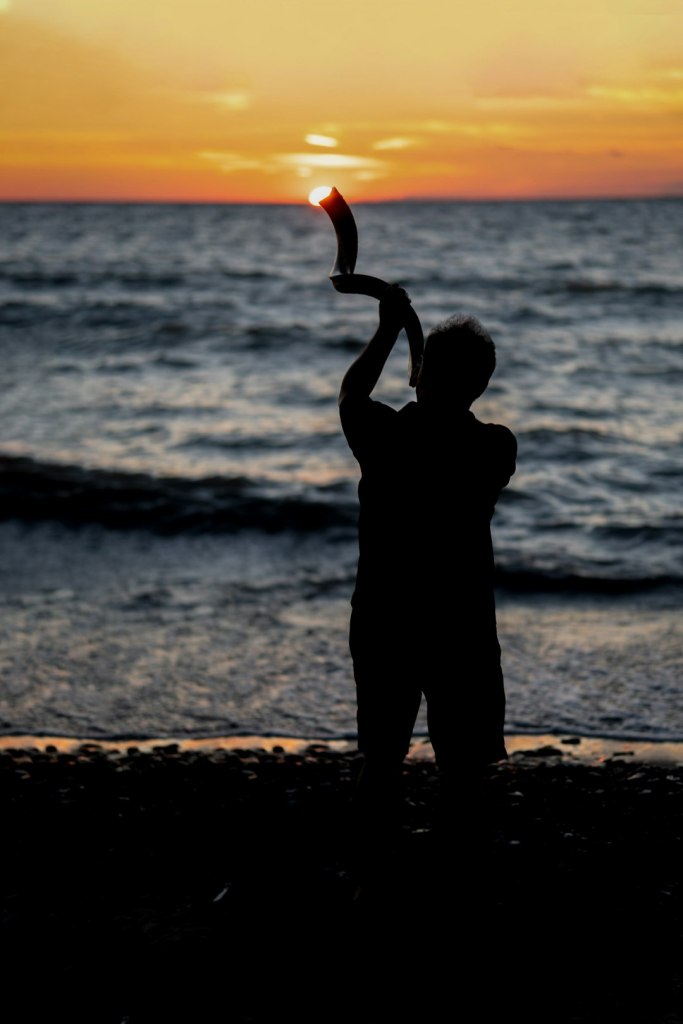
Today we mark Rosh Chodesh Elul, the first day of the final month of the Hebrew calendar. Elul is the time often set aside for spiritual and personal accounting ahead of the High Holiday season. This year, as has been true for many years now, I find myself entering and approaching this time with a great deal of heaviness, trepidation, and uncertainty. Whether you observe the High Holidays or not, I invite you to take some time for personal reflection and stock-taking.
I recently returned from a seven-day silent meditation retreat, a practice I engage in with some frequency. Often when I share with others that I have been on retreat or am planning to go, almost before I can complete my sentence, the response I am met with is often “How can you do that?” or “I could never do that! Isn’t that hard? How can you not talk to people at meals?” This response is illustrative of where we are as a culture. Ours is a culture that rewards distraction, fractures our attention such that an increasing number of us struggle to remain focused on one thing at a time and rewards us for not remaining with the present moment, just as it is. As a lover of long-form content and depth in my connections with others, this is particularly sad to me. We don’t know how—or if—we can sit with ourselves. I think many of us fear what will emerge when we take time for slowness, stillness, and silence. That fear is not misplaced. When all of the distractions are removed, the to-do lists, the ever-present jarring noises of our devices, the need to be somewhere, the stuff that lies under the surface that daily life tends to give us ample opportunities not to be with can come up. Skilled teachers of meditation practice, rooted in trauma-informed practice and other modalities of meeting difficulty with skill and wise presence are an integral part of retreat, helping participants navigate difficulties with ease and abundant compassion. In my experience, when I am able to meet what arises with skill and self-compassion, a sense of release and ease can sometimes emerge. The next time that same content comes up, as it inevitably will because that’s the nature of being a human being in this world, there are tools that are more readily available to me to use to meet it, whether that’s in formal meditation practice or in daily life when practice can have a particularly significant impact. As one of my retreat teachers taught us, sitting retreat is both about our practice and also about how we can come back from it and be even more present and attuned to others. Retreat isn’t for ourselves alone. It’s benefits extend and ripple outward, touching all those we meet. Retreat is a true gift; one I highly recommend.
This, too, is how Elul functions on the Jewish calendar. It is a time of inner work, stock-taking, making amends and doing a personal and communal accounting. This work, I believe, is becoming increasingly complex, as we are each working with layers upon layers of personal and collective memory, grief, regret, trauma, confusion, fear, and profound uncertainty. If we’re honest with ourselves, some of us may feel woefully unprepared to encounter the profound changes that have occurred in the world over the past decade or more. Some of us may experience an upending of our world and how we perceived ourselves in it that is startling or shattering, shocking, or enraging.
Simultaneously, some of us find ourselves in a place of profound recognition. Things were never as open or easeful as many around us imagined and though we knew this in our bones, we couldn’t or didn’t know how to articulate the rawness of our lived experience. We didn’t have space. Or if space emerged, people often didn’t know how to meet difficult truths. When met with a world unwilling or unable to hear and comprehend, we tended to shut down and step away.
My invitation this Elul is to find a way to use this time as a container for your own process. Perhaps this is done with others. It can be extraordinarily helpful to find a trusted individual or a small group of individuals with whom to begin those heartfelt, brave, and often deeply emotional conversations. You may want to spend more time journaling or in nature or engaging in spiritual practice. There are multiple daily opportunities to join others in meditation practice. Two I will mention here are the Institute for Jewish Spirituality and Or HaLev. Many Jewish organizations offer preparatory classes and opportunities for the High Holiday season during Elul. You may also find that taking intentional time to recite Psalm 27 daily, as is the traditional practice from Rosh Chodesh Elul through Shemini Atzeret can be a container to slow down and explore the abundance of human emotion and experience the Psalmist uses to express what words so often struggle to.
For those of us whose workloads increase exponentially this time of year, I first offer my heartfelt gratitude for the ways you steward so many of us through this time, holding all that needs holding, tending all that needs tending with love and care. Every year, it seems that work gets harder. May you find moments, no matter how small, to tend to yourself, ensuring your well is full. May we find moments of slowness and presence this Elul as we prepare to hear the still, small voice within. May that stillness lead us towards greater clarity and wisdom.

